
Most wing problems start before the wings touch heat. Wet skin, too much sugar in the dry rub, no time for the salt to pull moisture out — those three decisions happen before the oven preheats, and they determine whether your dry rub chicken wings come out with real crust or soft skin that looks right and bends instead of snaps.
I spent eight years on a restaurant grill station where wings went out by the hundreds every Friday night. The cooks who got consistently crispy wings understood one thing: moisture is the enemy of crust. Everything else follows from that.
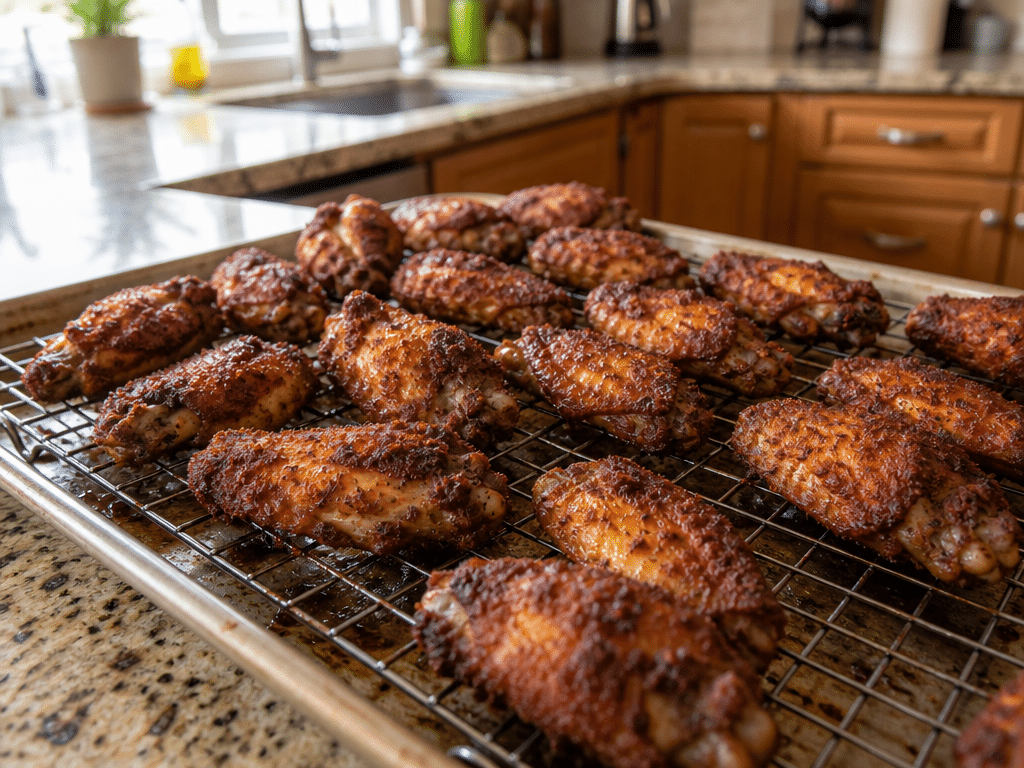
What goes in a dry rub for chicken wings?
A dry rub for chicken wings needs salt, smoked paprika, garlic powder, onion powder, black pepper, chili powder, a small amount of brown sugar, and cayenne for heat. The ingredient most recipes skip: aluminum-free baking powder. About 1 teaspoon per 2 lbs of wings. It raises the pH of the skin and produces significantly crispier results — not optional if you want real crust.
Table of Contents
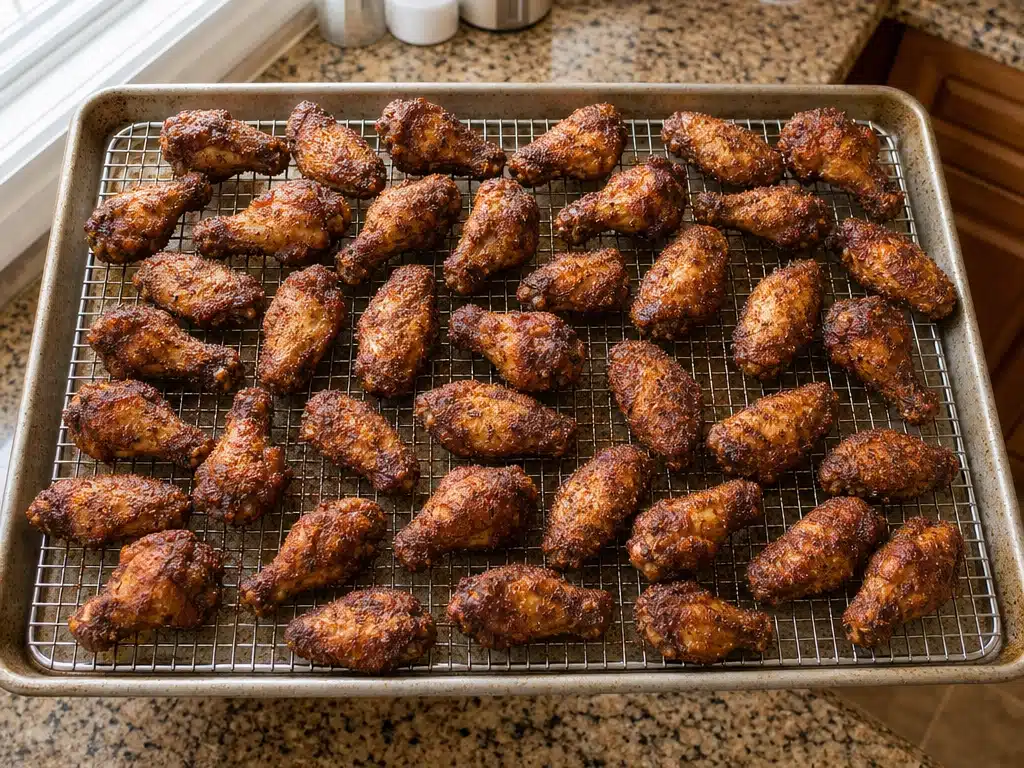
Dry Rub Chicken Wings
Ingredients
Method
- Pat wings completely dry with paper towels — every surface. For best results, place on a rack over a baking sheet and refrigerate uncovered for 1–2 hours. Wet skin is the single biggest reason wings don’t crisp. This step is not optional.
- Combine salt, baking powder, smoked paprika, garlic powder, onion powder, black pepper, chili powder, cayenne, and brown sugar in a small bowl. Mix until uniform — no streaks of any single spice.
- Toss wings in the rub, pressing it in with your hands to coat every surface. Let sit at room temperature for 30 minutes minimum. For maximum crispiness, refrigerate uncovered on a rack for 1–4 hours or overnight (up to 12 hours).
- Set oven to 425°F (220°C). Place a wire rack on a rimmed baking sheet. The rack lifts the wings so hot air circulates underneath — this is what creates even crisping. Without a rack, the underside steams.
- Place wings in a single layer on the rack. They should not touch. Overcrowding traps steam between pieces — the enemy of crust.
- Cook for 45–50 minutes, flipping once at the 25-minute mark. Wings are done when the skin is deeply golden and snaps when pressed lightly. Internal temperature should read 165°F minimum — I pull mine at 175–180°F for clean pullback on the bone.
- Rest wings on the rack for 3–5 minutes before serving. Do not pile them or cover with foil — trapped steam will soften the crust.
Notes
Why This Dry Rub Works
The baking powder is the part most recipes mention without explaining. It’s alkaline — it raises the pH of the chicken skin, and higher pH accelerates the Maillard reaction at lower temperatures. You get darker, crispier skin without cranking the oven past 450°F and burning the sugar in the rub.
The second mechanism: baking powder draws surface moisture out of the skin. That moisture evaporates in a hot oven. Evaporation equals crust. This is why a crispy wing rub with baking powder comes out measurably better than the same blend without it — same oven, same time, different surface chemistry.
Salt works a different way. Applied 30 minutes before cooking, it draws moisture out through osmosis. That moisture then gets reabsorbed along with dissolved salt — this is dry brining. It’s what gets seasoning into the meat rather than coating only the surface.
Brown sugar adds caramelization, but there’s a calibration problem: sugar burns at 375°F, and most grills run hotter than that on direct heat. In the oven at 425°F it’s fine. On the grill at 500°F it scorches before the skin crisps. The recipe uses 1 tsp brown sugar for oven cooking and drops to ½ tsp for the grill — that adjustment matters.
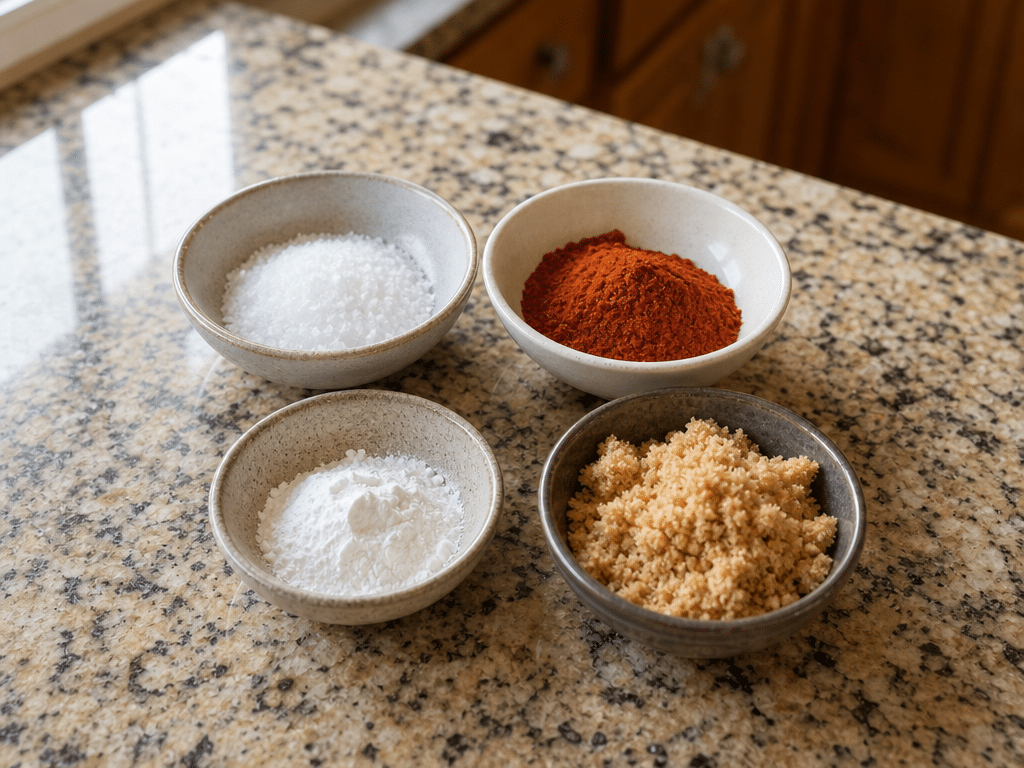
Chicken Wing Dry Rub Ratio — Getting the Balance Right
A chicken wing spice rub is a ratio problem first. The salt anchors everything — under-salted wings taste flat even with a full spice blend. Over-salted wings ruin the batch.
Volume measurements are inconsistent because salt density varies by brand. Diamond Crystal kosher salt is the professional kitchen standard — it’s lighter and larger crystals than Morton’s. If you’re using Morton’s, use ¾ of the amount listed, or the wings will come out over-salted. The recipe below uses Diamond Crystal.
The brown sugar variable changes with the cooking method:
- Oven at 425°F: 1 tsp brown sugar — caramelizes properly, does not burn
- Grill over direct high heat: ½ tsp maximum — full tsp scorches before skin crisps
- Air fryer at 400°F: 1 tsp is fine — air fryer heat is more controlled than direct grill flame
How Long to Apply Dry Rub to Chicken Wings
This is the section that changes results. Most home cooks rub the wings and go straight to the oven. That works. It just skips the dry brine window that makes the biggest measurable difference in crust quality.
| Timing | What Happens | Result |
|---|---|---|
| Immediately → oven | No osmosis. Salt stays on surface. | Surface seasoning only. Acceptable but not optimal. |
| 30 minutes ★ minimum | Salt draws moisture out, reabsorbs with seasoning | Seasoning penetrates skin. Drier surface starts forming. |
| 1–4 hours | Extended dry brine. Skin continues to dry. | Noticeably crispier skin, deeper flavor. |
| 8–12 hours (uncovered, refrigerator) | Maximum dry brine effect. Refrigerator air dries skin further. | Crispiest possible wings. ★ Best result |
| 24+ hours | Salt draws too much moisture out. Protein structure shifts. | Skin can become tough instead of crispy. Don’t go here. |
The uncovered refrigerator method is what the overnight step actually does. Refrigerator air is dry. That dry air pulls additional surface moisture from the skin. By the time those wings go into a 425°F oven, the surface is significantly drier than wings that were rubbed and cooked immediately — and that difference is exactly where the crust comes from.
Dry Rub vs. Wet Wings — Why the Rub Always Wins for Crispy Skin
Wet marinades move flavor into meat through a liquid medium. That liquid is also the problem. Every drop of moisture on a wing surface at the start of cooking has to evaporate before the skin starts crisping — that costs time and temperature.
A dry rub does the opposite. It draws moisture out before the wing hits the oven. The skin arrives at cooking heat already drier than an unmarinated wing fresh from the package.
The cooks I worked with who made the crispiest wings treated moisture as non-negotiable: pat dry, rack in the refrigerator, single layer in the oven — three steps before the rub goes on. Wet sauce is not the enemy. It belongs at the end, tossed onto wings that already have crust built. Starting wet and hoping for crispiness is asking two incompatible things from the same cook time.
For wings specifically, wet sauce applied before cooking also causes a problem on the grill: the sugar in most wing sauces burns at grill temperatures. Wing sauces work best as a finishing step — toss the cooked wings in sauce, serve immediately. The crust is already set. A thin coat of sauce won’t undo it if you move fast.
Variations Worth Trying
Buffalo Dry Rub — Double the cayenne to ½ tsp and add ¼ tsp dried ranch powder. After baking, toss finished wings with 1 tablespoon melted butter and 1 tablespoon hot sauce. Just enough to coat without making them wet again. This is the dry rub version of a buffalo wing — all the flavor, the crust still intact.
Lemon Pepper — Replace smoked paprika with 1 tsp dried lemon zest (spread fresh zest on a pan, 200°F oven for 20 minutes). Increase black pepper to 1 tsp. Skip the brown sugar entirely. This rub needs brightness, not caramelization. Works well for air fryer chicken wing rubs where you want a cleaner flavor profile.
Smoked and Garlic Heavy — Double the smoked paprika to 2 tsp and garlic to 1½ tsp. Reduce chili powder to ¼ tsp. This version produces a dark, complex crust with garlic as the dominant note. Good on thighs as well as wings. The extra paprika adds color without additional heat.
Crispy Baked Wing Rub (oven-optimized) — This baked wing rub recipe increases baking powder to 1¼ tsp total. Reduce salt by ¼ tsp to compensate. The extra baking powder is for oven cooking specifically — grill and air fryer have better airflow and don’t need the boost, but a conventional oven benefits from it.
Air Fryer Dry Rub Chicken Wings
Air fryer is the fastest path to crispy dry rub wings. The circulating hot air mimics the moisture-evaporation effect of an oven rack but runs faster and with better airflow on all sides. 400°F for 20–22 minutes — flip at the 10-minute mark — and the skin crisps from every angle, not just the bottom.
Two adjustments for the air fryer specifically. First, reduce baking powder to ¾ tsp — the circulating airflow does what the extra baking powder compensates for in a conventional oven, so you don’t need the full amount. Second, skip lining the basket with foil or parchment. The entire mechanism depends on hot air moving under and around the wings. Anything that blocks airflow extends cook time and kills crust development.
The brown sugar in the rub is not a problem at 400°F in an air fryer. The heat is circulating and controlled — not direct grill flame — so 1 tsp brown sugar caramelizes cleanly without scorching. Dry brine timing is the same as oven: 30 minutes minimum before cooking, overnight uncovered on a rack in the refrigerator for maximum crispiness. The same blend works as a grilled chicken dry rub — drop brown sugar to ½ tsp and keep the grill grates clean so the rub doesn’t scorch on residual fat.
What to Serve With Dry Rub Chicken Wings
Dry rub wings work standalone or with a dipping sauce. The rub builds enough flavor that sauce is a choice, not a requirement. If you want something on the side, anything acidic cuts through the crust well — a simple buttermilk ranch or a vinegar-forward hot sauce, not a thick creamy sauce that coats.
For the table: celery and carrot sticks. Keep them on a separate plate — moisture from wet vegetables transferred to the wing plate will soften the crust faster than anything else you can do to them.
The USDA safe poultry cooking temperature is 165°F internal. For wings with tight joints, pulling at 175–180°F gives cleaner pullback on the bone — the connective tissue breaks down at that temperature and the meat separates properly. Use an instant-read thermometer in the thickest part of the drum, away from the bone.
For more on how salt and fat interact with different proteins before they hit heat, Serious Eats’ wing science breakdown covers the baking powder mechanism in full detail and is worth reading if you want the chemistry behind why these steps work.
If you want to build more rubs from scratch — brisket, turkey, seafood — the full spice blends and seasoning mixes collection covers every protein with the same ratio-first approach.
Common Questions
How long do you leave dry rub on chicken wings before cooking?
30 minutes minimum. At 30 minutes, salt draws surface moisture out and reabsorbs it into the meat — this is the dry brine effect and it moves seasoning beneath the surface rather than keeping it on top. 1–4 hours deepens flavor further and dries the skin more. The best result comes from overnight application (8–12 hours) uncovered in the refrigerator. Past 24 hours the salt pulls too much moisture and the texture shifts from crispy to tough.
Is it better to dry rub or wet chicken wings?
For crispy skin, dry rub wins every time. Wet marinades or sauces leave surface moisture that must evaporate before the skin can crisp — that costs oven time and temperature. Dry rub draws moisture out before cooking starts, giving the skin a head start on crisping. Wet sauce belongs at the end, tossed on finished wings with crust already built. Starting wet and expecting crispy skin is asking two incompatible things from the same cook time.
Does baking powder make chicken wings crispy?
Yes — the mechanism is specific. Baking powder is alkaline. Raising the pH of chicken skin accelerates the Maillard reaction (browning and crust development) at lower temperatures, and draws surface moisture out of the skin. Both effects produce crispier wings without requiring extreme oven temperatures. Use aluminum-free baking powder only — aluminum brands leave a metallic aftertaste that is noticeable in a rub applied directly to the surface.
Can you put dry rub on chicken wings the night before?
Yes — and overnight is the best method for maximum crispiness. Apply the rub, place wings uncovered on a rack, refrigerate for 8–12 hours. The dry refrigerator air pulls additional moisture from the skin surface throughout the night. By the time the wings go into the oven, the skin is significantly drier than wings rubbed and cooked immediately. The ceiling is 12 hours — past that, salt pulls too much moisture and the skin can turn tough instead of crispy.
Should you oil chicken wings before dry rub?
No — not when baking powder is in the rub. Oil on the skin before rubbing interferes with the moisture-drawing effect of the salt and baking powder. Both ingredients work by interacting directly with the skin surface. A coating of oil between them and the skin reduces that contact. If you’re making this rub without baking powder, a light coat of neutral oil helps adhesion. With baking powder, pat dry and apply the rub directly to bare skin.
How do you get dry rub to stick to chicken wings?
Pat the wings completely dry first — this is the key step. Wet skin causes the rub to slide and clump rather than stick evenly. After patting dry, apply the rub and press it in with your hands rather than just sprinkling. Salt begins drawing surface moisture from the skin within seconds of contact, and that moisture acts as a natural adhesive that locks the rub in place. Thirty minutes of rest after application gives this process time to work fully.
The rub works. The timing works. What most people skip — 30 minutes minimum on a rack before the oven — is what separates wings with real crust from wings that look right and bend instead of snap.
How long does dry rub for chicken wings last?
The dry rub blend lasts 3–4 months in an airtight jar stored away from heat and light. Make a full batch — multiply the recipe by four — and keep it on hand. The variable to watch is the baking powder: it stays active for about 6 months after opening but loses leavening power faster in humid kitchens. If the rub has been sitting in a steamy environment for months, replace the baking powder before the next batch. The spices have a longer shelf life than the baking powder does.
The Takeaway
Restaurant kitchens dry brine because it works. The baking powder disrupts the skin’s pH so moisture escapes fast and crisps without added fat. The salt penetrates through osmosis so seasoning reaches the meat, not just the surface. The brown sugar caps at 1 teaspoon because above that, the oven scorches it before the wings finish cooking. Every ratio in this rub is a reason. Understand the reason and you’ll never pull a soggy wing out of an oven again.
The baking powder does what nothing else in the rub does. Pat the wings completely dry, press the rub in with your hands, and rest them uncovered on a rack for 30 minutes before the oven. Everything after that is heat and time. Get the prep right and the crust builds itself.